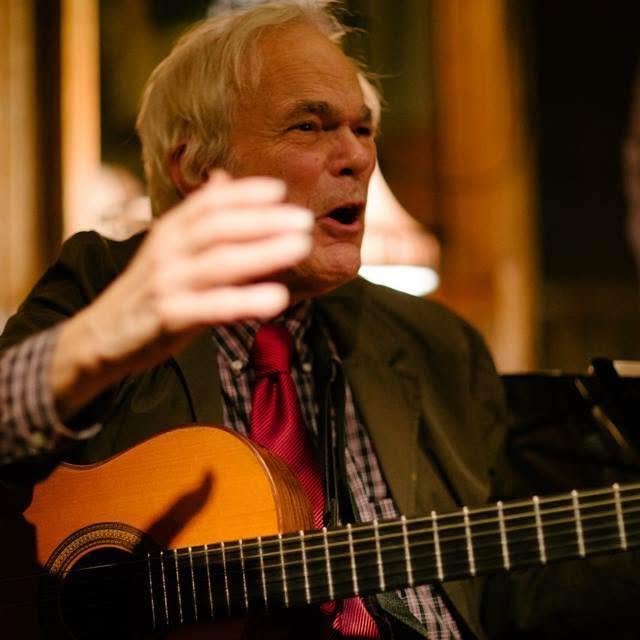
Gene Bertoncini, the acclaimed American jazz guitarist celebrated for bringing classical technique and the warm sound of the nylon-string guitar into jazz, has died at the age of 89. His death was reported at the end of August 2026, with musicians and longtime friends sharing tributes to a player whose career stretched across more than six decades. Bertoncini, born in New York City on April 6, 1937, performed and recorded with some of the biggest names in American music, including Tony Bennett, Buddy Rich, Benny Goodman, Wayne Shorter, Lena Horne and Nancy Wilson. News of the Gene Bertoncini obituary has prompted an outpouring of memories describing him not only as a master guitarist but also as an unusually kind and encouraging human being.
Gene Bertoncini, one of the most respected nylon-string jazz guitarists of his generation, died at age 89 in late August 2026. A reported date of death is August 29, although a definitive family notice has not yet been located. His cause of death has not been publicly disclosed. Bertoncini was renowned as a performer, arranger and educator whose collaborators included Tony Bennett, Buddy Rich, Wayne Shorter and Benny Goodman.
| Key detail | Information |
|---|---|
| Full name | Gene J. Bertoncini |
| Born | April 6, 1937 |
| Birthplace | New York City |
| Age | 89 |
| Reported death | August 29, 2026 |
| Profession | Jazz guitarist, arranger and educator |
| Instrument | Guitar, especially nylon-string guitar |
| Education | University of Notre Dame |
| Degree | Architectural Engineering |
| Cause of death | Not publicly disclosed |
Gene Bertoncini Dies at 89
Reports of Bertoncini’s death began circulating through the jazz and guitar communities as August came to an end.
Musicians who had performed with him, studied his work or simply spent time with him quickly began sharing memories.
The response reflected the extraordinary respect Bertoncini commanded among guitarists.
A report published after news of his death described him as a prominent American jazz guitarist who had transformed his approach after becoming interested in classical guitar.
Members of the jazz guitar community similarly remembered him as an extraordinary player whose death represented a significant loss to the instrument.
The precise medical cause of his death has not been made public.
Who Was Gene Bertoncini?
Gene Bertoncini was born in New York City on April 6, 1937, and grew up in a musical household.
His father, Mario, played guitar and harmonica, while his brother Renny became an accordionist and keyboard player.
Gene began playing guitar as a child and was already working professionally while still in his teens.
AllMusic describes him as having become a professional musician by age 16, including performing on a children’s television programme.
Music, however, was not initially the career path he formally studied.
Bertoncini attended the University of Notre Dame and graduated in 1959 with a degree in architectural engineering.
He also played clarinet in the Notre Dame marching band.
Years later, he said his engineering education continued to shape the way he approached music, particularly the importance of planning and thinking carefully about how a piece could be arranged.
From Engineering Graduate to Professional Guitarist
After completing university, Bertoncini ultimately chose music over engineering.
He served in the Marines before becoming involved in Chicago’s jazz scene.
His career then brought him back to New York, where opportunities expanded quickly.
Bertoncini worked with vibraphonist Mike Mainieri and later became part of a Buddy Rich ensemble.
He also performed in television orchestras associated with shows led by figures including Merv Griffin and Skitch Henderson.
Over time, Bertoncini developed into one of the industry’s most dependable and versatile guitarists.
Gene Bertoncini Played With Jazz and Pop Legends
The list of artists connected with Bertoncini reflects the breadth of his career.
His official biography credits him with performances or recordings involving Benny Goodman, Buddy Rich, Wayne Shorter, Hubert Laws and Paul Desmond.
He also accompanied major vocalists including Tony Bennett, Lena Horne, Nancy Wilson, Vic Damone and Eydie Gormé.
Other career associations included Carmen McRae, Clark Terry, Charles McPherson and Burt Bacharach.
Bertoncini also spent time as a member of The Tonight Show band.
Rather than being tied to only one corner of jazz, he moved comfortably between small ensembles, orchestras, studio sessions, vocal accompaniment and solo performance.
Why Gene Bertoncini Was Different
Perhaps the most distinctive element of Bertoncini’s sound was his use of the nylon-string guitar.
Jazz guitar had long been associated primarily with electric instruments.
Bertoncini took another route.
He developed a style in which jazz harmony and improvisation were combined with techniques more closely associated with classical guitar.
That combination helped make him one of the most recognisable nylon-string players in modern jazz.
AllMusic later described him as one of the true masters of nylon-string acoustic jazz guitar, praising the way his arrangements combined jazz reharmonisation with classical technique.
Julian Bream Recording Changed His Musical Direction
Bertoncini credited guitarist Chuck Wayne with helping trigger that transformation.
During a 2022 interview, Bertoncini recalled Wayne encouraging him to listen to classical guitarist Julian Bream.
The experience changed the course of his playing.
Bertoncini said he loved the sound immediately and began taking classical guitar lessons.
He did not completely abandon the electric guitar, but the nylon-string instrument became central to his musical identity.
That decision ultimately distinguished him from countless other jazz guitarists.
Tony Bennett Praised Bertoncini’s Artistry
Bertoncini’s official website includes particularly strong praise from Tony Bennett.
Bennett described him as an exceptionally creative and completely original artist whose performances consistently demonstrated mastery of the guitar.
Such praise carried particular weight considering the musicians Bennett encountered over his own long career.
Bertoncini was sometimes referred to as the “Segovia of jazz,” a comparison to classical guitar master Andrés Segovia that reflected his ability to bring refinement and classical technique into improvisational music.
Solo Guitar Became an Important Part of His Legacy
Bertoncini was particularly admired for playing without a rhythm section.
Solo jazz guitar is extraordinarily demanding because one player must simultaneously suggest melody, harmony, rhythm and movement.
Bertoncini turned that challenge into one of his signatures.
His album Body and Soul became a strong example of that approach.
AllMusic praised the recording for its marriage of jazz reharmonisation and classical guitar technique, highlighting Bertoncini’s highly individual interpretations of standards.
He also recorded solo arrangements on Quiet Now and published material that allowed other guitarists to study his approach.
Years at Bistro La Madeleine
One particularly important part of Bertoncini’s New York musical life was his long residency at Bistro La Madeleine on West 43rd Street.
Guitarist Greg Skaff remembered Bertoncini playing solo there on Sunday and Monday evenings from 1990 until 2008.
For Skaff, being able to regularly hear Bertoncini perform alone became an education in itself.
He recalled being amazed by what one musician could accomplish with a guitar.
Eventually, Bertoncini even asked Skaff to substitute for him on several occasions.
Skaff remembered him not only as an extraordinary musician but as someone who was generous and encouraging when another guitarist needed work.
Fred Fried Remembers a Kind Friend
Guitarist Fred Fried was among those mourning Bertoncini after his death.
Fried described him as both a wonderful musician and an exceptionally kind human being.
He remembered Bertoncini encouraging him as a player and recalled a concert they performed together in New York for the American Institute of Guitar.
For Fried, the friendship mattered as much as the musicianship.
His tribute reflected a theme repeated by several people who knew Bertoncini: brilliance never seemed to make him inaccessible.
Dave Dreiwitz Calls Bertoncini a Jazz Legend
Bassist Dave Dreiwitz also remembered Bertoncini warmly.
He described the guitarist as a jazz legend and a master of his instrument.
Dreiwitz recalled spending time with him, listening to his stories and enjoying the warmth he brought into a room.
They also had opportunities to perform together.
His remembrance focused not only on Bertoncini’s music but also on the positivity and personality behind it.
Sara Caswell Remembers 26 Years of Friendship
Violinist Sara Caswell shared an especially personal remembrance.
She first met Bertoncini during a Skitch Henderson recording session at Nola Studios in Manhattan in January 2000.
Their musical connection became clearer later that year when the pair performed together at Carnegie Hall.
That relationship continued for more than a quarter-century.
Caswell remembered concerts, rehearsals, jam sessions and meals at Italian restaurants across New York.
She described Bertoncini’s devotion to music, guitar, family, friends and neighbours as unmistakable.
Most strikingly, she remembered how he treated everyone — including people he had never previously met — with warmth, respect and kindness.
Gene Bertoncini Was Also an Influential Teacher
The Gene Bertoncini obituary is not complete without acknowledging his influence as an educator.
Bertoncini served on music faculties and taught workshops over many years.
Institutions associated with his teaching included William Paterson University, New York University, the Eastman School of Music, New England Conservatory and the Banff Centre in Canada.
He also participated in jazz workshops and guitar camps.
Jazz Guitar Today described Bertoncini as not only an important performer but one of the instrument’s highly respected educators.
Teaching gave him a second form of legacy.
His musical ideas did not remain only on recordings.
They passed directly to younger guitarists.
His Recordings Spanned Decades
Bertoncini built a substantial recording career as leader, collaborator and session musician.
His catalogue included Body and Soul, Quiet Now, Someone to Light Up My Life and numerous collaborative recordings.
He also recorded with bassist Michael Moore, with whom he developed a highly regarded duo.
A 2026 retrospective noted that Bertoncini and Moore had been playing around New York by the 1970s and released their album Bridges in 1977.
Critics eventually regarded the partnership as one of the notable small jazz ensembles of its period.
Later projects included Jazz Therapy, Vol. 1: Smile with guitarist Roni Ben-Hur.
Gene Bertoncini Cause of Death
A specific Gene Bertoncini cause of death has not been publicly disclosed in reliable reporting currently available.
Tributes announcing his passing have concentrated overwhelmingly on his career, personality and musical influence.
Until relatives or another authoritative source release additional information, it is appropriate to list his cause of death as not publicly announced.
Similarly, funeral and memorial arrangements have not yet been reliably established.
Frequently Asked Questions
Who was Gene Bertoncini?
Gene Bertoncini was an American jazz guitarist, arranger and educator known especially for playing jazz on the nylon-string guitar. His career included work with Tony Bennett, Buddy Rich, Benny Goodman, Wayne Shorter, Nancy Wilson and many other leading musicians.
How old was Gene Bertoncini when he died?
Gene Bertoncini was 89. He was born in New York City on April 6, 1937. Reports of his death emerged at the end of August 2026.
What was Gene Bertoncini’s cause of death?
No specific cause of death has been publicly confirmed in the reliable information currently available. His death has been announced and widely mourned by fellow musicians, but medical details have not been released.
Conclusion
Gene Bertoncini leaves behind one of the most distinctive legacies in American jazz guitar.
He began playing as a child in New York, studied architectural engineering at Notre Dame and ultimately devoted his life to music.
Over the decades that followed, his guitar was heard alongside Buddy Rich, Benny Goodman, Tony Bennett, Wayne Shorter, Nancy Wilson and many others.
But Bertoncini’s importance went beyond the famous names in his credits.
He helped demonstrate that the nylon-string guitar could have a powerful and sophisticated voice in modern jazz.
His solo arrangements brought together classical technique, jazz harmony, bossa nova influences and a sensitivity that made even familiar standards sound personal.
The tributes following his death reveal another side of his legacy.
Fred Fried remembered encouragement. Greg Skaff remembered generosity. Dave Dreiwitz remembered positivity. Sara Caswell remembered decades of friendship and a man who treated strangers with the same kindness he showed longtime colleagues.
That may ultimately explain why the loss of Gene Bertoncini is being felt so deeply.
Jazz has lost a master guitarist, but many of those who knew him are also mourning a teacher, collaborator and friend whose warmth was every bit as memorable as the music he played.